Guide ·
How to Choose the Right Pouch for Your Product
The right pouch protects what is inside, works on your packing line and sells your product on the shelf. The wrong one tips over, wastes film or costs more than it needs to. Here is a practical way to choose between the main pouch styles, and the questions to settle before you ask for a quote.
Start with the product, not the pouch
Before comparing styles, write down what the pouch has to hold and how it will be used. The answers narrow the choice quickly:
- Form: is it a powder, granules, whole pieces, something oily or something with sharp edges?
- Weight and volume: how much goes in each pouch, and how dense is it?
- Storage: will it sit on a shelf, in a refrigerator or in a freezer?
- Display: does it stand on a shelf, hang on a peg, lie in a bin or ship in a box?
- Use: is it opened once, or opened and closed many times?
A single-serve snack, a bag of frozen vegetables and a family-size bag of pet treats each call for a different pouch, even if the artwork looks similar.
The main pouch styles
Most retail and food pouches fall into four styles. Each has a job it does best.
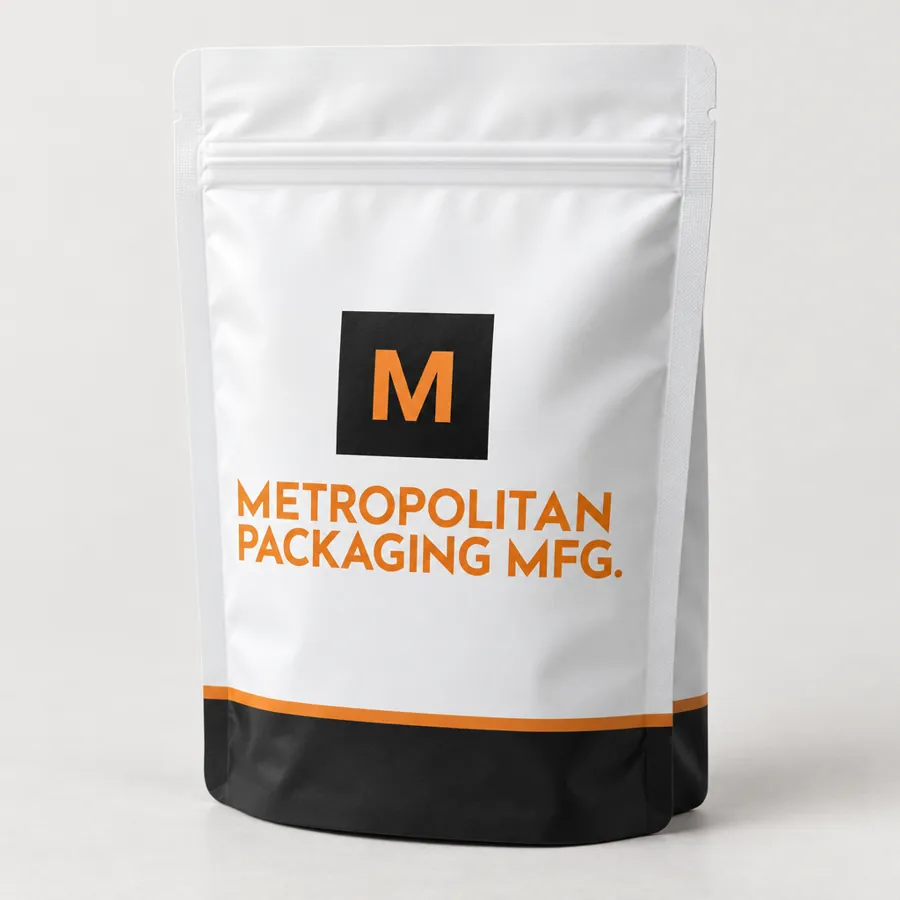
Stand up pouches. A gusset in the bottom opens into a base when the pouch is filled, so it stands upright on the shelf with the front panel facing shoppers. Stand up pouches are the go-to for snacks, coffee and tea, candy, dried fruit, pet treats and supplements. They are easy to display and easy to brand.
Flat pouches. Sealed on three sides and filled from the top, flat pouches lie flat or hang from a peg. They are economical, simple to fill and suited to single servings, samples, spices, small parts and anything sold in a bin or on a hook. See our flat pouches and bags.
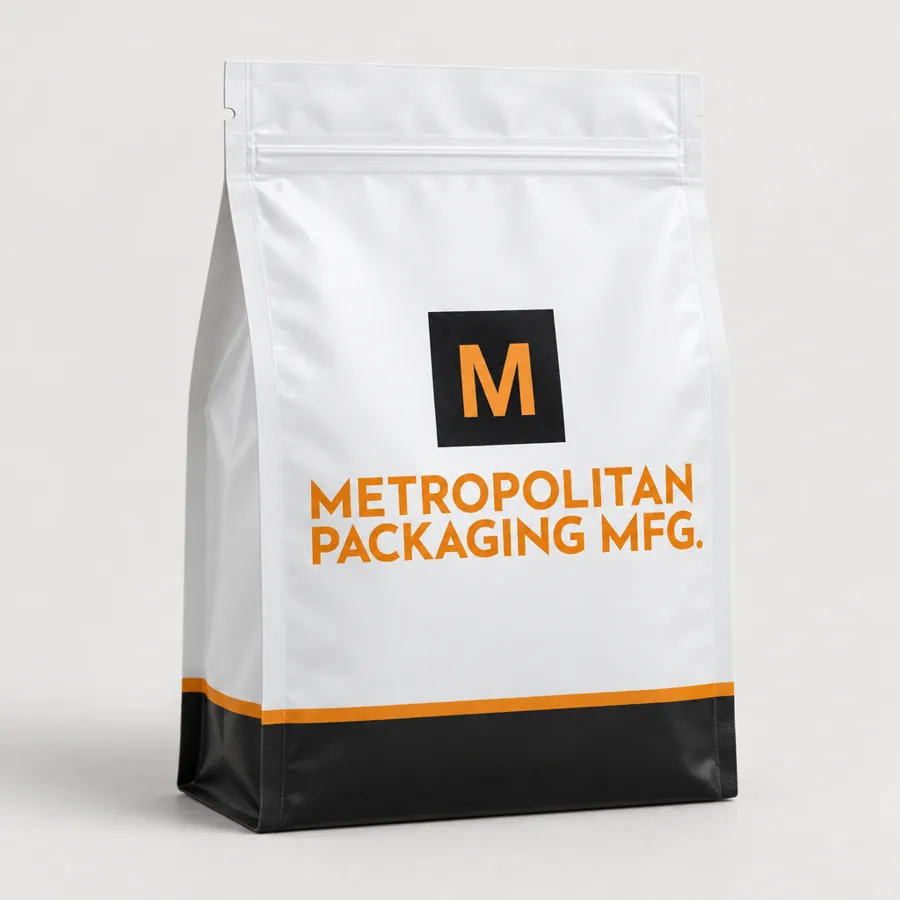
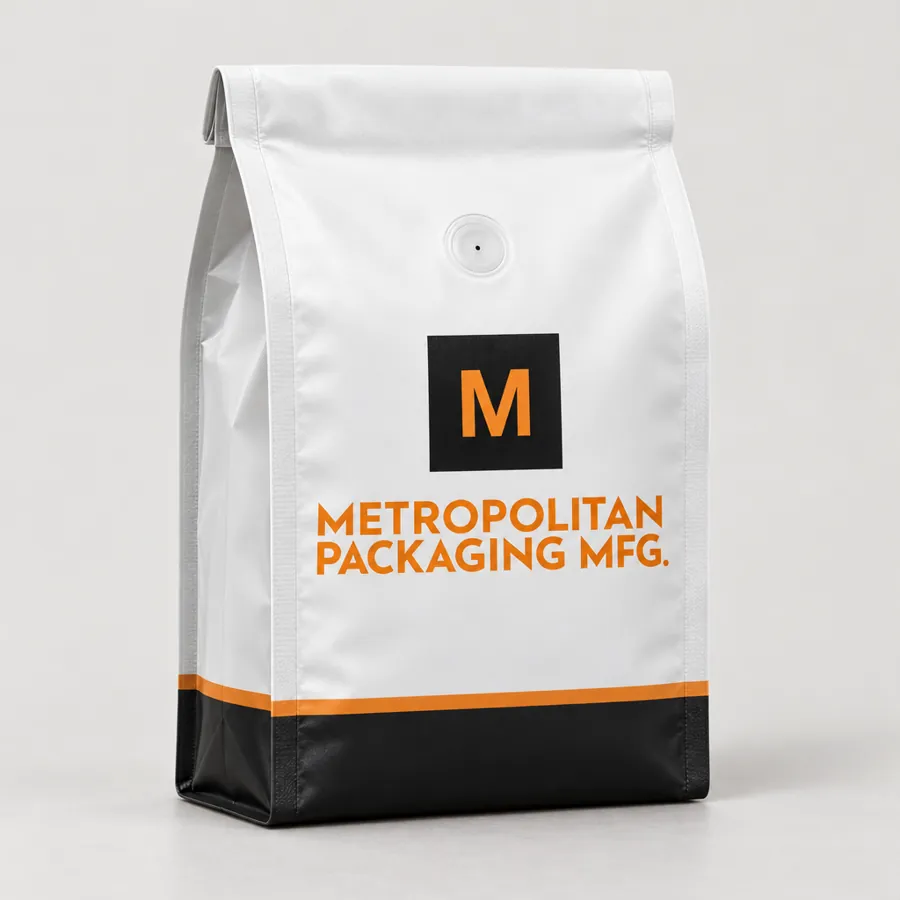
Flat-bottom box pouches. These have a flat, rectangular base and side gussets, so the filled pouch stands like a box and offers five printable panels. Flat-bottom box pouches suit larger fills and premium products where shelf presence matters, such as coffee, granola and pet food.
Quad-seal pouches. A seal on each of the four vertical corners gives the pouch a sharp, structured shape that holds its form even as the contents are used. Quad-seal pouches work well for heavier products like pet food and birdseed.
Choosing the film
The film determines how the pouch feels, how clear it is and how it seals. The two workhorse materials are polyethylene (PE) and polypropylene (PP). PE is flexible, tough and seals reliably, which makes it a strong choice for heavier fills and frozen products. PP is stiffer and clearer, so the product looks crisp and clear through the film.
For food, the materials must be FDA-compliant for food contact. Ask your supplier to confirm this for every layer that touches the product.
Special conditions call for special features:
- Anti-Fog for fresh produce and chilled foods, so condensation does not hide the product.
- UV protection for products displayed under bright store lights, to help limit fading.
- Cold Seal for products that should not be exposed to heat during sealing, such as some confections.
- Anti-Static for electronic components and fine powders that cling to film.
Closures and convenience
If a customer will open the pouch more than once, a press-to-close zipper is worth it. It keeps the product fresh, prevents spills in the pantry, and is now expected on snacks, coffee, frozen foods and pet treats. Single-use products like samples and single servings can skip the zipper and keep the pouch simpler.
If you fill pouches on a form-fill-seal machine, the zipper can be applied to the film before it reaches your line. Pre-zippered rollstock gives you resealable packages without adding a zipper step to your process.
Getting the size right
A pouch is defined by width, height and, for stand up and box pouches, gusset depth. The simplest way to size one is to start from your fill: the weight or volume of product in each pouch. Light, bulky products such as chips need a larger pouch than dense ones like coffee beans at the same weight.
Leave enough room above the product for the seal and, if you use one, the zipper. A pouch that is too tight is hard to fill and seal cleanly. One that is too loose slumps on the shelf and wastes film. If you can, send your supplier a sample of the product, or fill a few test pouches yourself before you commit to a size.
Printing and branding
Custom pouches turn the package into your label. Plan your artwork around the panels the shopper actually sees. On a stand up pouch, the front panel does the selling and the back carries ingredients, nutrition facts and the barcode. On a box pouch, the side gussets give you extra space for a story or instructions.
We print pouches with flexographic printing in up to 8 colors, enough for a full brand palette, solid color areas and small, sharp type. Keep fine text and barcodes away from seals and folds so they stay legible.
Stock pouches or custom pouches?
Stock pouches come in standard sizes and plain colors and work well for test batches or very small runs, usually with a sticker for branding. Once your product and volume are steady, custom pouches give you a size that fits, printing that sells, and the features your product needs, all without a labeling step.
What to have ready for a quote
You do not need final artwork to start. A useful quote request includes:
- The product and how much goes in each pouch.
- The pouch style you have in mind, or the one you are using now.
- An approximate size, if you know it.
- The quantity per order and how often you reorder.
- The number of print colors.
- Features such as a zipper, Anti-Fog or UV protection.
Our minimum order is 5,000 for stand-up, flat-bottom box and quad-seal pouches, and 10,000 for flat pouches and most bags.
Metropolitan Packaging has made custom printed packaging in Brooklyn, New York for more than 60 years, with printing and pouch making done in house. Tell us about your product and we will help you choose the right pouch. Request a quote, call 1-800-642-0165 or email Sales@metropack.com.